

Circular economy packaging in practice: tailor-made reusable IBC solutions for liquids, powders and granules
The circular economy is no longer a theoretical sustainability concept.
Across industries, businesses are actively redesigning products and systems to eliminate waste, reduce resource use and keep materials in circulation for as long as possible. Packaging plays a critical role in this shift, particularly for companies moving bulk products.
A recent article, How the circular economy could end waste as we know it, Octobox has already been using Circular Economy Waste Reduction highlights how different sectors are moving away from disposable models and towards reuse, repair and reconditioning. The same principles apply directly to industrial bulk packaging, especially for liquids, powders and granules, in both food and non-food applications.
At Octobox, this is not a new direction. It is the foundation of how our reusable IBC solutions have been designed and used for decades.
Why reusable IBC packaging matters in a circular economy :-
Traditional single-use packaging systems are familiar, however they are inefficient.
Drums, disposable boxes and one-way containers generate repeated waste, increase handling costs and offer little visibility over lifecycle impact.
Circular packaging starts with a different question:-
How do we keep packaging in use safely, economically and repeatedly without compromising the product or the supply chain?
Reusable and reconditionable IBC packaging solutions answer this question when they are designed correctly. Instead of being discarded after one use, reusable IBCs are cleaned, inspected, repaired where necessary and returned to service. This reduces waste, lowers total cost of ownership and supports measurable sustainability goals.
Liquids, powders and granules require different IBC solutions
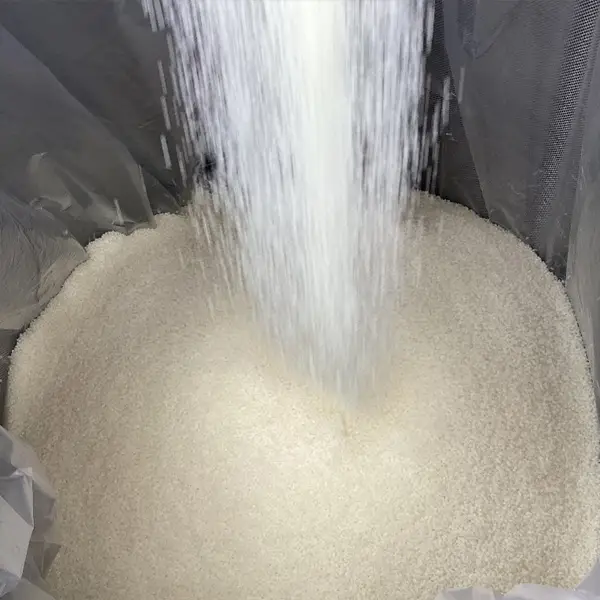
One of the most important lessons from successful circular economy models is that one-size-fits-all does not work. This is particularly true for bulk packaging.
Liquid IBC solutions must account for food and non-food requirements, appropriate fill and discharge options, stacking performance and validated cleaning processes.
Powders and Granules behave very differently, often requiring specific liners, controlled discharge, dust management and, in some cases, FIBC stacking frame solutions.
Food and non-food industries introduce additional considerations around hygiene, material selection and reconditioning processes.
Trying to force all of these requirements into a generic container is where many reuse initiatives fail.
Octobox addresses this by offering tailor-made reusable IBC solutions, configured around the product, the industry and the operational flow.
Rather than asking customers to adapt their processes to a standard container, Octobox configures its IBC platform to suit liquids, powders or granules, whether food-grade or industrial.
Industry-specific IBC packaging, not generic containers
Buyers increasingly search for IBC suppliers by industry, not just by container size.
Food and beverage producers, ingredient processors, chemical manufacturers and bulk handlers all prioritise different features.
Octobox supports this industry-specific approach by configuring reusable IBCs based on:
- Product Type (liquids, powders or granules)
- Food or Non-Food use
- Discharge method and liner requirements
- Stacking and pallet configuration
- Return logistics and reconditioning cycles
This flexibility is what allows one reusable IBC platform to support multiple industries while still delivering predictable performance and compliance. It is also how Octobox differentiates itself from larger suppliers offering more generic packaging systems.
Return logistics make circular packaging work in practice
The circular economy only works when packaging can be returned efficiently.
Reusable IBCs that cannot be moved back through the supply chain economically quickly lose their advantage.
Octobox containers are designed with return logistics in mind. Fold-flat empty units significantly reduce transport space on return journeys, making reuse viable even across longer distances. Strong stacking performance and standard pallet compatibility support efficient storage, warehouse handling and container loading.
These design choices are what turn reuse from an environmental idea into a practical, scalable logistics solution for liquids, powders and granules.
Repair and reconditioning keep IBCs in circulation
Repair and reconditioning are essential to any reusable packaging system. Containers must be easy to inspect, clean and repair so they can be safely returned to service multiple times.
Reconditioning has formed the backbone of Octobox’s business for over 40 years. Containers are designed so components can be replaced without scrapping the entire unit, extending usable life and reducing material waste. This approach supports both sustainability targets and long-term cost efficiency for customers.
For businesses, this means fewer packaging failures, more predictable performance and a sustainability story based on real operational data rather than assumptions.
What this means for businesses today :-
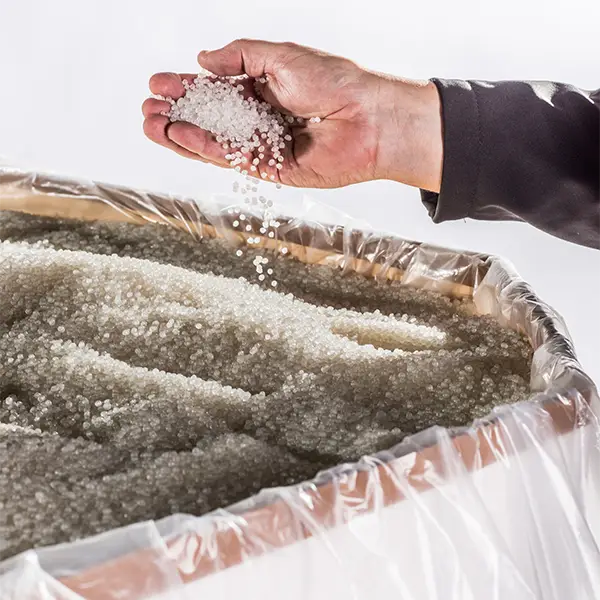
For companies moving liquids, powders and granules, the shift towards circular packaging is already underway. The question is no longer whether reusable IBC packaging makes sense, but which reusable IBC solution is right for the product and industry.
- The most effective starting point is often a pilot:-
- Select a high-volume product flow
- Configure a tailor-made reusable IBC solution
- Measure performance across several cycles
The data gathered from this process provides clear evidence of cost, efficiency and environmental impact, making future decisions far easier.
Turning circular economy principles into practical packaging solutions
Circular economy principles only succeed when they are practical, measurable and repeatable. Reusable IBCs designed around the product, supported by reconditioning and aligned with real-world logistics are a proven way to achieve this.
If you want to learn more about tailor-made reusable IBC solutions for liquids, powders and granules, across food and non-food industries –
Get in touch to discuss how Octobox can support your packaging strategy